-the process by which one sensory receptors and nervous system receive stimulus from the environment
-Bottom-Up Processing: begins with sense receptors and works up to the brain's integration of sensory information (thalamus)
-Top-Down Processing: information processing guided by higher level mental processes
Thresholds
-Absolute Threshold: the minimum stimulation needed to detect a stimulus 50% of the time
-Difference Threshold ("Just Noticeable Difference" or JND): the minimum difference a person can detect between two stimuli
-ex: if you were asked to hold two objects of different weights, the JND would be the minimum weight difference between the two that you could sense half of the time
Weber's Law
-the idea that to perceive a difference between two stimuli, they must differ by a constant percentage, not a constant amount
Signal Detection Theory
-predicts how we detect a stimulus and other stimuli
Sensory Adaptation
-decreased responsiveness to stimuli due to constant stimulation
Selective Attention
-the focusing of conscious awareness on a particular stimulus
Cocktail-Party Phenomenon
-the ability to focus one's listening attention on a single talker among a micture of conversations and background noises, ignoring other conversations
-form of selective attention
Vision
-most dominating sense
-visual capture
- Phase One: gathering light
- short wavelength = high frequency (bluish colors, high pitched sounds); long wavelength = low frequency (reddish colors, low pitched sounds)
- height of a wave gives us its intensity (brightness)
- length of a wave gives its hue (color)
- the longer the wavelength, the redder; and the shorter the more violet
- Phase Two: Getting the light in the eye
- Cornea --> Pupil --> Lens --> Retina

- The Young-Helmholtz Trichromatic Theory (Three Color Theory)
- three types of cones: red, blue, green
- these three types of cones can make millions of combinations of colors
- most colorblind people simply lack cone receptor cells for one or more of these primary colors
- Opponent-Process Theory
- the sensory receptors come in pairs; if one color is stimulated, the other is inhibited
- Red/Green
- Yellow/Blue
- Black/White
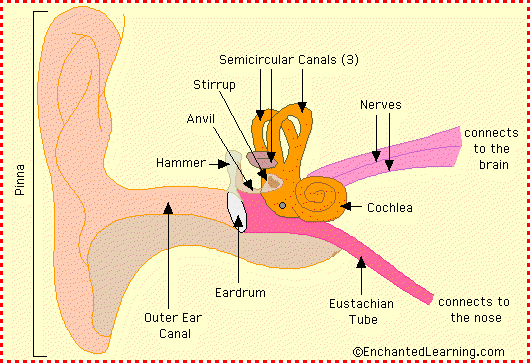 Auditory Sense
-we hear sound waves
-the height of the wave gives us the amplitude of the sound, the frequency gives the pitch
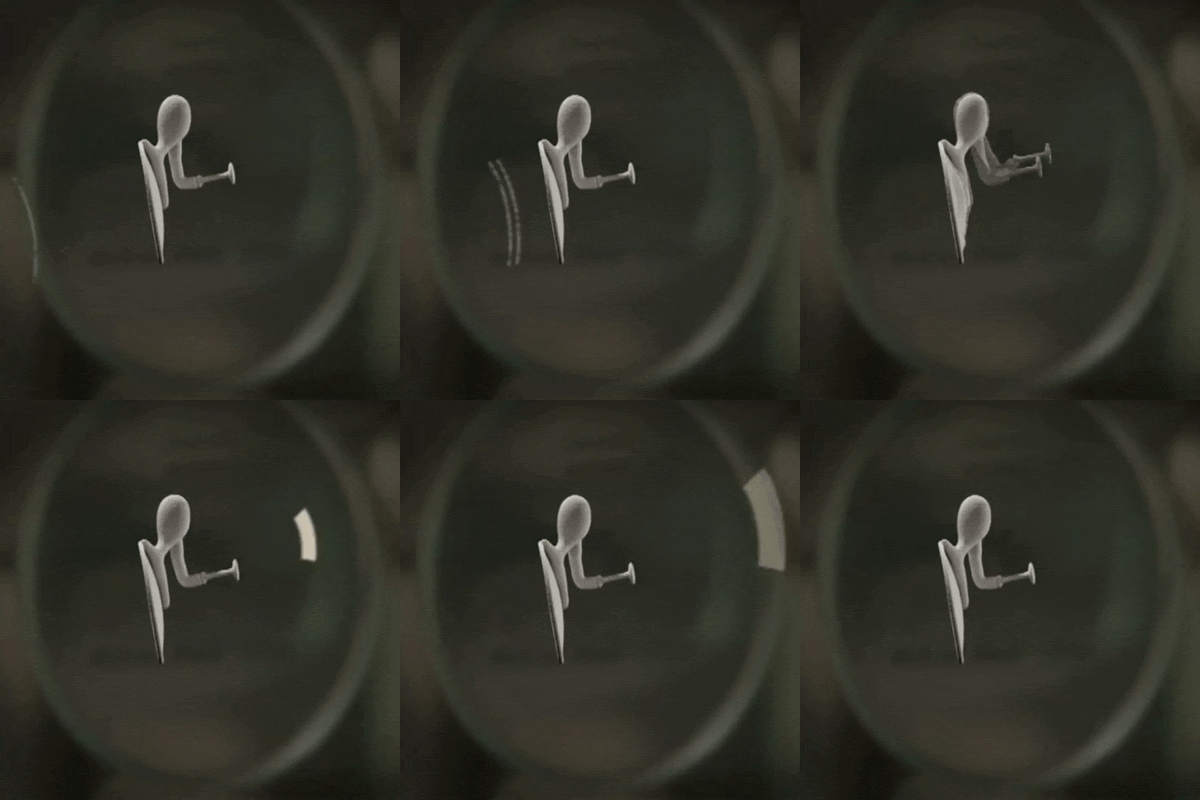 Transduction in the Ear
-Sound waves hit the eardrum, then anvil, then hammer, then stirrup, then oval window
-everything is just vibrating
-then the cochlea vibrates
-the cochlea is lined with mucus called basilar membrane (contains hypersensitive hairs)
-when hair cells vibrate, they turn vibrations into neural impulses which are called organ of Corti
-then sent to thalamus up the auditory nerve
Theories
- Place Theory: different hairs vibrate in the cochlea when there are different pitches
- some hairs vibrate when they hear high pitches and others vibrate when they hear low pitches
- Frequency Theory: all the hairs vibrate but at different speeds
- Conduction Deafness: something goes wrong with the sound and the vibrations on the way to the cochlea
- you can replace the bones or get a hearing aid to help
- Nerve (sensorineural) Deafness: the hair cells in the cochlea get damaged
- can be caused by loud noises
- hairs are irreplaceable
- cochlea implant is possible
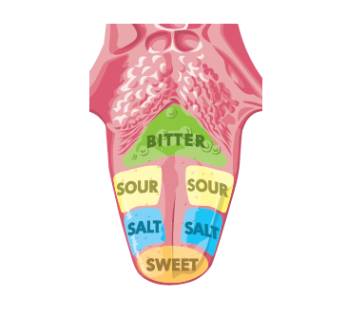 Smell and Taste
-sensory interaction: the principle that one sense may influence another
Taste
-we have bumps on our tongue called papillae
-taste buds are located on the papillae (all over the mouth)
-sweet, salty, sour, bitter, spice
-Umami: flavorful, meaty, savory taste
Touch
-receptors located in our skin
-Gate Control Theory of Pain: the theory that the spinal cord contains a neurological "gate" that blocks pain signals or allows them to pass onto the brain
-Vestibular Sense: tells us where our body is oriented in space; our sense of balance
-Kinesthetic Sense: tells us where our body parts are; receptors located in our muscles and joints
Perception
-the process of organizing and interpreting information, enabling us to recognize meaningful objects and events
-Gestalt Philosophy: the whole is greater than the sum of its parts
-Figure-Ground Relationships: the organization of the visual field into objects (figures) that stand out from their surroundings (ground)
-Grouping: the perceptual tendency to organize stimuli into groups that we understand
Touch
-receptors located in our skin
-Gate Control Theory of Pain: the theory that the spinal cord contains a neurological "gate" that blocks pain signals or allows them to pass onto the brain
-Vestibular Sense: tells us where our body is oriented in space; our sense of balance
-Kinesthetic Sense: tells us where our body parts are; receptors located in our muscles and joints
Perception
-the process of organizing and interpreting information, enabling us to recognize meaningful objects and events
-Gestalt Philosophy: the whole is greater than the sum of its parts
-Figure-Ground Relationships: the organization of the visual field into objects (figures) that stand out from their surroundings (ground)
-Grouping: the perceptual tendency to organize stimuli into groups that we understand
- Proximity
- Similarity
- Continuity
- Connectedness
Depth Perception
-the ability to see objects in three dimensions although the images that strike the retina are two dimensional
-allows us to judge distance
Binocular Cues
-Retinal Disparity: a binocular cue for seeing depth
-the closer an object comes to you, the greater the disparity is between the two images

Hey Antonette, I just wanted to add that Gestalt Psychology is also about studying the mind and behavior as one rather than studying the mind or studying behavior itself. You can think of it as looking into a big picture but just not the small parts.
ReplyDeleteHope that makes sense and Good Luck in your studies!